|

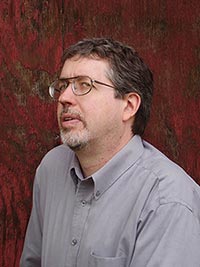 I first met Norman Prentiss at a birthday party for a mutual friend, Deena Warner. I previously had known him as a name on the message boards. In a short time, I felt comfortable talking with him and I knew that I had made a lifelong friend. It's one of those things that happens all too infrequently as we get older. I first met Norman Prentiss at a birthday party for a mutual friend, Deena Warner. I previously had known him as a name on the message boards. In a short time, I felt comfortable talking with him and I knew that I had made a lifelong friend. It's one of those things that happens all too infrequently as we get older.
I didn't know that Norman was a writer, but I found out before too long. He had a story in an anthology that I had a hand in. The book was called Tales from the Gorezone and Norman's story was a nasty little number called “Glue Traps.” I liked the story almost as much as I liked Norman. But I was unprepared for the breathtaking novella that Norman Prentiss would eventually allow me to read. The novella is called Invisible Fences, and it is coming from Cemetery Dance Publications sometime in 2008. I predict that it will be one of the most acclaimed books of the year.
With Norman's first book publication on the horizon, I invited him to answer a few questions for Horror Drive-In readers and he graciously accepted.

Horror Drive-In: Hey Norman, how are you doing?
Norman Prentiss: Pretty great. It's always fun to hang out at the Drive-In!
HD-I: Let's start at the beginning. How long have you been a horror fan?
NP: Always! One early memory I have is taking a paperback of Edgar Allen Poe stories to my kindergarten class. My father must have bought it for me, after I'd seen the Roger Corman films on Channel 9 or channel 20. I'd somehow learned to read by accident or osmosis on my own, before we'd been taught, and when the teacher saw me with the book she warned the other students, "Don't let him read 'The Tell-tale Heart' to you, or you'll have nightmares." So of course, the first thing a group of us did during recess was gather outside for a secret reading.
HD-I: What about the movies? How much influence were they upon you?
NP: The movies were a big influence. My father often summarized his favorite movies for me—The Creature from the Black Lagoon and other Universal horrors, especially—and it would be months or years before I'd get to see the actual film when it cycled into the TV schedule: Friday and Saturday night, of course, but sometimes you got lucky and they'd show something spooky during the afternoon movie before the local news. I used to pour through the TV Guide as soon as it came in the mail, looking for horror movies in any possible spots. You didn't have as many choices then, so it made any horror movie feel like a discovery.
And then there were the shows, particularly Twilight Zone and Outer Limits. After Poe, my first favorite writers were the regulars from the Twilight Zone: Serling's books were easy to find in the supermarket, but I had to dig in a used bookstore to find a lot of the Matheson and Beaumont. I lived in Wheaton, Maryland, and my favorite weekend trip was to Barbarian Books, which had the best collection of used paperbacks and comics. I started getting Robert Bloch books there, too. And Fredric Brown. Then I'd cross the street to the Wheaton Newstand and get the latest issue of Creepy.
HD-I: I grew up near you in Baltimore and I cut my horror moving teeth on Sir Graves Ghastly Presents. Did you watch it?
NP: Yeah, I loved Sir Graves Ghastly. He was the first horror-movie host I'd seen, on Channel 9. I have almost no memory of any particular film he hosted, but I clearly remember the dancing skeletons, and his crazy-funny laugh. I sent in a crayon drawing for his "Art Ghoulery," where they'd showcase kid art after the commercial break, but my picture never made it to the show before the local edition was canceled. That was my luck back then: the "teacher" on Romper Room never said my name, either.
HD-I: Moving on, at what point did you decide that you wanted to be the giver instead of the receiver of horror. Did you always want to be a storyteller?
NP: It's not really one instead of the other, since reading and storytelling were always connected for me. When I was a kid, I wrote serialized stories on notebook paper, complete with a teaser for the next issue at the bottom of the back page. One of them was about a vampire named Pete, which evidently seemed a very sinister name to me at the time! I turned these in to my elementary school English teacher with a note across the top that said, "Please write any comments in pencil"—since I considered these published, you know, and wanted to erase the comments to keep a clean copy. She used pen anyway, damn her! I also wrote a wildly inappropriate "twist ending" story for my high school literary magazine: as a high school teacher now, I would have censored myself!
In college, I started out writing Twilight Zone type stories in my creative writing classes, but genre stuff wasn't popular in the workshops—so, I tried a bit of realistic-style fiction, but I hadn't really lived enough to make it interesting. Even so, I won a pretty lucrative award from my college—the Sophie Kerr prize for a graduating senior "having the best ability and promise for future fulfillment in the field of literary endeavor." In 1984, it was a check for $35,000. On the radio the next morning, I heard one of my teachers saying something like, "Oh, we hated his stories, but thought his literary criticism was good."
I kept going with academics for about a decade after that, earning a Ph.D. in literature from Washington University. I concentrated on 19th Century British Lit., and wrote about Thomas Hardy for my dissertation. My emphasis was on how the gothic novel influenced Hardy's themes and his sense of storytelling. So, I spent a lot of time away from creative writing, but was still interested in horror.
My college teaching job after that was at a state school in Alabama, and I ended up as the staff supervisor for an alumni writing group. The adults in that group ended up inspiring me to write poetry, and that became my creative outlet for several years. A lot of my poetry was humorous, and usually pretty grim: "The Heaven of Severed Arms," or "The Comedy Director Considers Suicide."
When I moved back to Maryland in the late 90s, I went to the first Horrorfind convention on a whim. That was the real turning point for me. I'd gone to see the movie stars, but Brian Keene had organized an incredible line-up of horror authors, and I ended up going to a lot of the readings. I heard great stuff, and suddenly realized what I'd been missing all these years. Also, in the goodie bag from the convention were an issue each of Horror Garage and Cemetery Dance magazines, plus a beautiful hardcover book of Richard Laymon's The Traveling Vampire Show. I read Laymon's book, and his writing style struck a nerve with me—a kind of reader-friendly stream-of-consciousness—and I thought it was really cool, and I wanted to try something like that. That's when I wrote my first horror story in almost two decades, "Glue Traps." [Note: a revised version of this story, and some of the poems mentioned above, are currently available in the “Free Reads” section of my website: http://normanprentiss.com/freestuff.php]
So, Horrorfind and Cemetery Dance were really the ones that drew me back into horror. That was really a lucky convention visit for me!
HD-I: Have you done any critical writing on the current state of the horror fiction genre?
NP: I think that might be too much like my previous life in academia, which I've escaped (for the time being, at least!). I haven't done book reviews, either: too much like writing a paper for class. However, I did lead a few interviews with writers a while back, and might do something like that again.
HD-I: You work for Cemetery Dance Publications. Can you tell us a bit about your duties there?
NP: It all started out with a bit of proofreading. I met Rich Chizmar at the first Borderlands Bootcamp, where he was one of the instructors, and I offered to help out with the books or the magazine—I figured, Hey, I love the stuff CD puts out, and would want to read it anyway! As it turns out, I'm a very slow proofreader (a dozen pages an hour is fast for me!), but I guess I caught a lot of stuff, since they asked me to do more. Sometimes the proofing grew into some mild copyediting, then formatting some electronic files for the designer—and I still do a bit of that work now and then. But the major thing I do now is read story submissions for the magazine. I'm the first reader for most of the fiction submissions, which translates to about 1-2 bins of stories each month. I haven't done an exact count, but I'd estimate that out of every hundred stories, I send about 5 to Rich for a second (or third, or fourth) read.
I think I was just in the right place at the right time for that gig. Whenever I finished a proofing job, I tended to drop it off at the CD office instead of trusting the mail—their office is about 40 minutes from my home. One time I must have been standing in front of several overflowing bins of submissions, and maybe a light bulb went on over Brian Freeman's head. Before I knew what hit me, I had hundreds of manilla envelopes in the trunk of my VW Beetle.
Okay, it might have been slightly more complicated than that, but that's how I remember it.
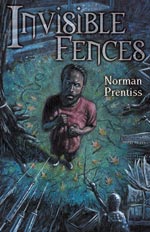 HD-I: Let’s move on to Invisible Fences. Can you describe the plot of the book and tell our readers a little bit about the gestation of it? HD-I: Let’s move on to Invisible Fences. Can you describe the plot of the book and tell our readers a little bit about the gestation of it?
NP: The genesis of the story was in a couple poems I wrote about 10 years ago. They weren't particularly good poems, but I liked the narrator, and the idea that he wouldn't take risks. "I want to coast into my tragedies," he says, which is a line I borrowed for Invisible Fences. How does a character get this way, I wondered. I wrote the book as a kind of memoir, with the adult narrator trying to explain why he lives an isolated, mostly lonely life. He traces his behavior back to his childhood, and the cautionary tales his parents told him: mini horror stories, really, about kids being run over by cars, or getting lost in dangerous woods. Something goes wrong when he defies one of these stories, and the experience makes him overly cautious as an adult. Eventually, his parents stories come back to haunt him…
HD-I: This is your first book, and it's already getting a lot of praise from some industry heavyweights. This has gotta make you feel good, right?
NP: It's been kind of surreal, especially getting blurbs from a lot of the people who inspired me to begin with: Tom Monteleone, a great writer and teacher whose Borderlands Boot Camp really helped me take my writing to new levels; Douglas Clegg and T. M. Wright; Kealan Patrick Burke, the first guy who ever published a piece of my fiction.
Also, I think the artwork for the book is its own kind of compliment. I'm really honored by Steven Gilbert's striking cover image, and Keith Minnion’s atmospheric interior art.
A lot of the buzz has been helped along by the Cemetery Dance Book Club, which included a free advance copy of the book to this year's subscribers. I don't post frequently on message boards, but I read them pretty regularly, and really appreciate the nice feedback I've gotten from folks like Andrew Monge, JDAR, asimmons, and Tony Williams. I can't wait for the book to come out, and hope I hear from even more readers. I'll always check out the Drive-In message board, and also invite people to stop by at www.normanprentiss.com for some free poems or stories, recent news, and links to my blog and my Horror World message board.
Keep watching the Cemetery Dance Website for information on purchasing Invisible Fences and if you haven't done so, subscribe to the free email newsletter for breaking news as well as exclusive sales and deals on their fine products: http://www.cemeterydance.com/page/CDP/Newsletter
|